Most parents spend more time researching a stroller than they do vetting a preschool. That’s not a criticism — the process is genuinely confusing, and most programs look similar on a website. This post gives you a straightforward way to evaluate what you’re actually looking at.
Why “Best” Depends on More Than Google Reviews
Five-star reviews tell you parents are happy. They don’t tell you why, or whether the reasons would matter to you. A program can have glowing reviews because the staff is warm, the location is convenient, and the hours work well — none of which tells you whether the Montessori approach is authentic or whether it’s the right fit for your child specifically.
The better question isn’t which program has the most reviews — it’s what does this program actually do with my child for six hours a day? That answer requires a tour, specific questions, and knowing what to look for when you walk through the door.
The Three Things That Separate Good Montessori Programs From Great Ones
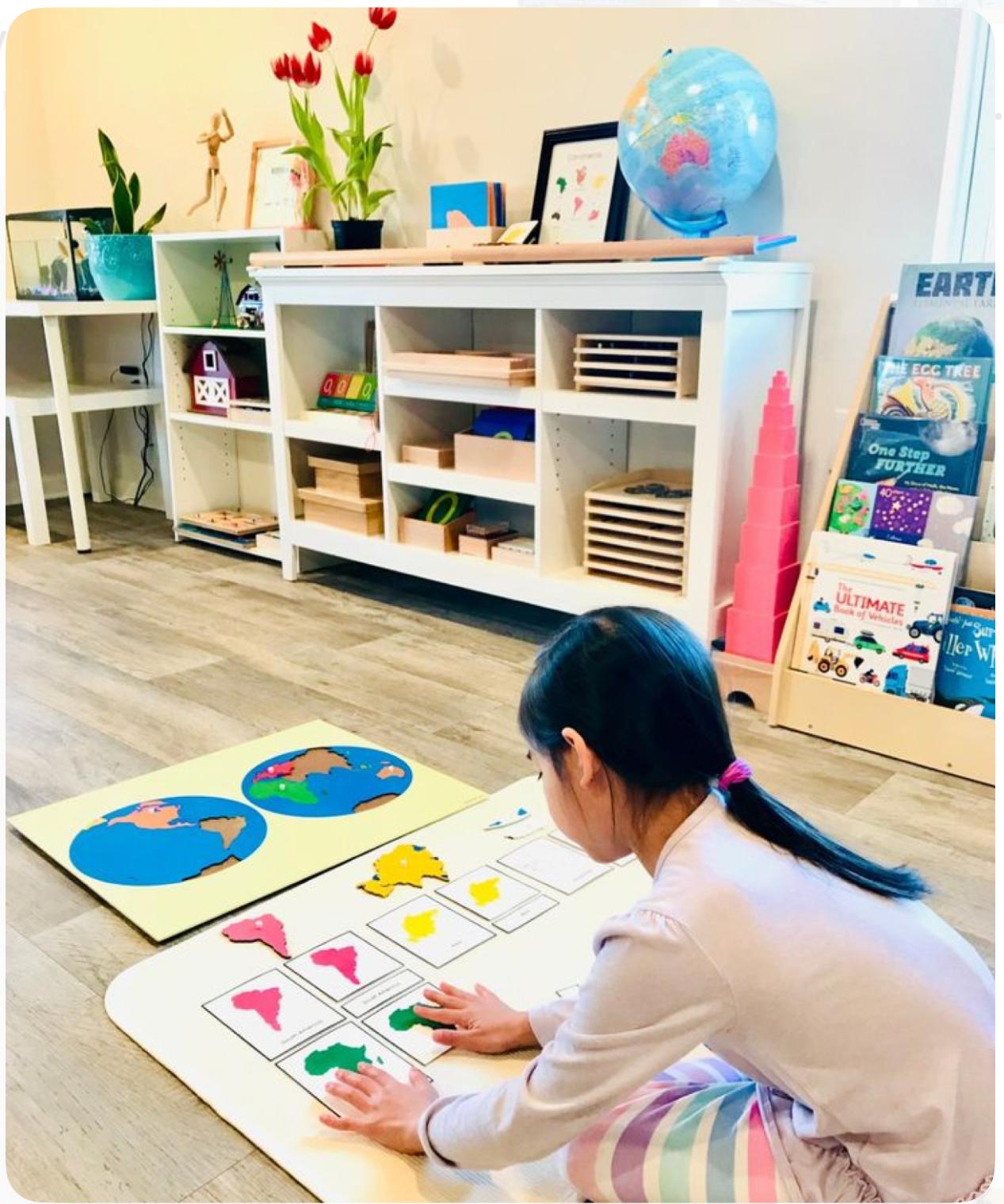
Most legitimate Montessori programs get the basics right — child-sized furniture, Montessori materials on low shelves, mixed or banded age groups. What separates genuinely strong programs comes down to three things most parents don’t think to check.
Educator continuity. Children under 6 build trust through consistent relationships. A program with high staff turnover — even a beautiful one — undermines the security children need to learn confidently. Ask directly: how long have your lead educators been here?
Observation over intervention. In a well-run Montessori classroom, you’ll see educators watching children work before stepping in. They’re tracking what each child is ready for next. If every adult in the room is constantly redirecting, prompting, or entertaining, the child-led learning is mostly cosmetic.
Individualized communication. At pickup, can an educator tell you specifically what your child worked on that day? Not “they had a great time” — but the actual activity, how long they stayed with it, what they seemed drawn to. That level of attention signals a program tracking individual development, not just managing a group.
What the Physical Environment Tells You in the First Five Minutes
Walk in and look low — not at eye level, but at a child’s eye level. Are the shelves organized clearly, left to right, simple to complex? Are materials complete and in good condition, or are pieces missing and trays disheveled? Is there enough floor space for children to lay out a work mat without crowding each other?
A well-prepared Montessori environment feels calm and purposeful. Not sterile — there should be evidence of real work happening — but organized in a way that communicates respect for the children using it. Clutter, noise, and chaos are signals worth paying attention to, even if the program technically checks the Montessori boxes.
What I Look For When Parents Ask Me to Compare Programs
When Red Deer parents come to us after visiting other centres, the feedback I hear most often is some version of: it seemed fine, but I couldn’t picture my child there. That instinct is worth trusting.
What I tell them is to picture the specific moment their child gets frustrated — because that moment will happen. What does the adult do? In a strong Montessori program, the response is calm, patient, and focused on the child finding their own way through it. Not rescue, not punishment — presence. That’s what builds resilience, and it’s something you can actually observe on a tour if you watch for it.
At Brainy Bees Montessori, that approach runs through every age group — from our infant program right through to Before and After School Care for kindergarteners. The consistency matters as much as any individual program feature.
FAQ
How many Montessori programs should I visit before deciding? Visit at least two, even if the first one feels right. Comparison gives you context. A program that seemed impressive on its own can look very different once you’ve seen another. Bring the same two or three questions to each tour so you’re comparing like for like — not just impressions.
What’s a realistic child-to-educator ratio to expect in a Montessori preschool? For preschool-aged children (3–5 years), a ratio of around 10–12 children per educator is reasonable in a well-run Montessori setting. Lower is better for individualized attention. If a program has 20 children and one lead educator, the child-led model is very difficult to sustain in practice — regardless of what the curriculum says.
Should my child have any Montessori experience before starting preschool? No prior experience is needed. Children adapt quickly to the Montessori environment, especially when the transition is handled thoughtfully. What matters more is that the program has a real onboarding process — not just a one-hour orientation, but a gradual introduction that lets your child build comfort and trust before full days begin.
If you’re narrowing down your options and want to see Brainy Bees Montessori in person, we’re happy to walk you through the classrooms and answer your specific questions. Book a tour at brainybees.ca or reach us at info@brainybees.ca.